
How Robot Polishing Is Transforming the Future of Manufacturing Automation

Posted by Social AMS on 21 Oct, 2025
Robot polishing represents the intersection of innovation and automation, a driving force behind Industry 4.0 and the rise of smart factories. As Vietnam continues to invest in industrial modernization, manufacturers are increasingly automating production processes, including surface finishing.
Today's manufacturers must not only focus on product quality but also stay ahead of emerging production trends. Understanding the inevitable evolution toward automation helps businesses make strategic investments and strengthen their competitive edge.
This article explores the growing adoption of robot polishing systems, a technology already well established in Europe and the U.S. and highlights how the right polishing materials and compounds are essential to achieving consistent, high-quality finishes.
1. What Is Robot Polishing?
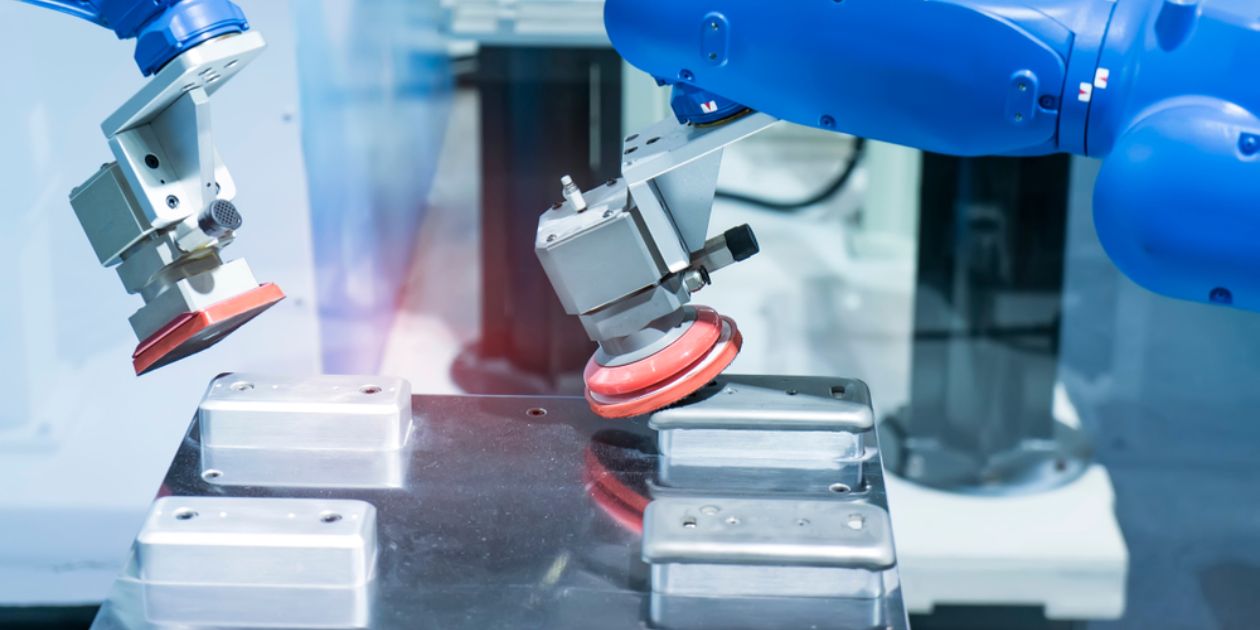
Robot polishing refers to the use of industrial robotic arms programmed to process surfaces using specialized abrasive and polishing tools. Equipped with Automatic Tool Changer (ATC) technology, these robots maintain constant speed and pressure throughout the polishing cycle, ensuring uniform productivity and precision.
Adopting robotic polishing offers significant advantages, especially in workforce optimization and operator safety. Automation is the ideal solution for large-scale production, delivering consistently perfect finishes for automotive parts, precision components, and consumer electronics.
Beyond productivity, robots help reduce workers' exposure to dust-related diseases and repetitive strain injuries such as wrist inflammation, shoulder pain, and lower back fatigue, common risks in manual polishing operations.
2. Global Trends in Robot Polishing
According to Allied Market Research (AMR), the global sanding and polishing robotics market is projected to reach USD 750 million by 2032, growing at a CAGR of 13.5%. The combination of automation efficiency, accuracy, and rapid advancements in robotics continues to accelerate adoption across industries like automotive and electronics.
In Vietnam, while detailed statistics on robot adoption remain limited, automation and smart factory initiatives are expanding rapidly. One report shows that the Vietnamese electronics sector has reached an automation adoption rate of 78%, surpassing regional averages.
The main driver behind this growth is the increasing demand for higher precision and surface quality from end customers. Industries with extremely tight tolerances—such as optics, electronics, automotive, and aerospace—require ultra-smooth finishes. For instance:
-
Optical molds: Ra < 0.05 µm
-
Medical plastic molds: Ra < 0.2 µm
Even minor deviations of a few microns can compromise the value of a finished component.
However, robot polishing can only perform at its best when paired with premium polishing materials. The uniformity of abrasive grains, purity of polishing liquids, and stability of binders in stones or wheels directly affect the surface quality and tool life.
As a result, many manufacturers now prefer high-performance materials and polishing compounds, such as diamond suspensions, CBN powders, and polishing compounds from trusted global brands like Kemet and Hyperion. These solutions are specifically engineered for robotic systems, ensuring precise, stable, and easily controllable surface finishing in automated environments.
3. Applications of Robot Polishing Across Industries
3.1 Automotive Industry
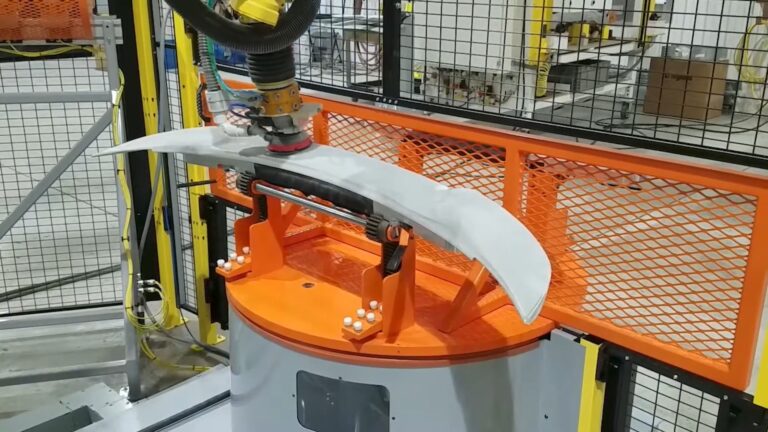
In automotive manufacturing, robots perform polishing tasks on body panels, wheels, and other components. Automation not only enhances throughput but also ensures uniform surface quality an essential factor for maintaining brand reputation in the automotive sector.
>> See more: The Role of Diamond Powder in Polishing Micro Components for Automotive Engines
3.2 Aerospace Industry
Achieving aerodynamic precision and ultra-tight tolerances requires extreme surface accuracy. Robot polishing enables mirror-like finishes on complex aerospace components and can reach narrow or irregular surfaces that manual polishing cannot handle.
3.3 Medical Device Manufacturing
In the medical sector, robotic polishing is used to finish and sterilize parts. When combined with techniques such as electropolishing, robots help achieve sterile, ultra-smooth surfaces necessary for implants and surgical tools. Automated polishing also minimizes contamination risks associated with manual methods.
>> See more: How to increase the life of medical plastic injection molds?
3.4 Other Industries
Robot polishing is widely applied in:
-
Optics and Glass - Polishing lenses, mirrors, and precision optical parts requiring high-pressure finishing.
-
Semiconductors - Polishing silicon wafers and components in cleanroom environments.
-
Metalware and Cutlery - Achieving flawless visual finishes on knives, utensils, and decorative metal items.
4. The Role of Polishing Materials and Compounds in Robot Polishing
| Industry | Application | Recommended Products |
| Automotive |
Polishing plastic injection molds for headlights, interior panels, handles, emblems, and metal components such as pistons, camshafts, and gearbox housings. |
Norton Diamond/CBN Grinding Stones or Hyperion CBN Tools; Kemet Diamond Compound / Kemet Diamond Suspension |
| Medical Devices |
Polishing molds for syringes and medical casings; finishing metal implants and surgical tools (stainless steel, titanium). |
Kemet Diamond Compound (0.25-3 µm) + Kemet Type W Suspension; Hyperion Diamond Powder / Kemet Diamond Slurry |
| Aerospace |
Superfinishing nickel/titanium alloy components; mirror finishing optical molds and composite mold surfaces. |
Hyperion CBN Micron Powder / Norton Superabrasives; Kemet Diamond Suspension (0.1-1 µm) |
5. Conclusion
The integration of robot polishing and advanced polishing materials is not just a trend, it's a defining factor for competitiveness in modern manufacturing.
As an authorized distributor of Kemet and Hyperion solutions, AMS provides both premium products and expert technical consultation. With over two decades of industry experience, we help manufacturers achieve superior surface finishing and process efficiency. Contact AMS today to start a technical discussion and discover the right polishing solution for your production needs.
AMS Company, Ltd.243/9/10D To Hien Thanh, Ward 13, District 10
Hot line: 028.3868 3738/3903 - Fax: 028.3868 3797