
What Is a Wire Drawing Die? How to Repair and Polish Wire Drawing Dies

Posted by Social AMS on 24 Apr, 2025
Wire drawing die polishing is a crucial technical step required after the die has been used in production for a certain period. Over time, the die can become worn or lose its polished surface, leading to substandard product finishes. Before diving into the polishing solutions for wire drawing dies, let's explore with AMS what a wire drawing die actually is, its applications in various industries, and the proper methods for repairing and polishing these dies.
1. What Is a Wire Drawing Die?
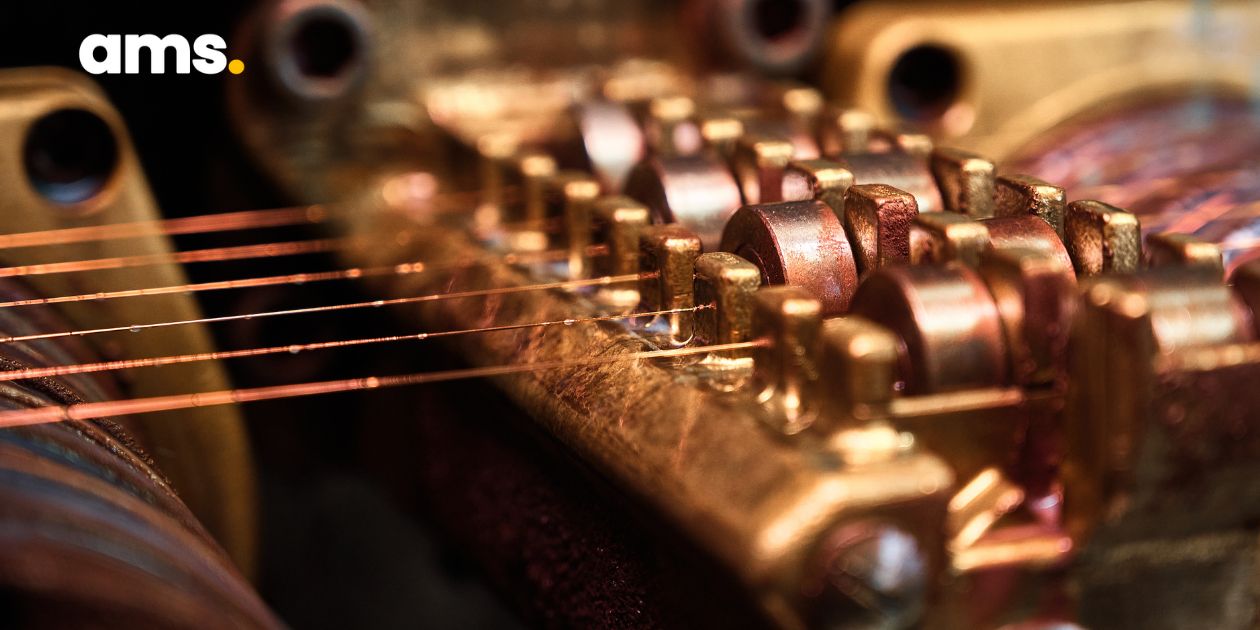
A wire drawing die is a precision tool used in the wire drawing process. It is specifically designed to create deformation and elongation of wire materials by pulling them through a tapered hole. The die typically has two ends: a larger entrance hole and a smaller exit hole, the latter corresponding to the desired final wire diameter.
Wire drawing dies are applicable across a wide range of materials, from soft metals such as gold, silver, and copper to harder metals like iron, steel, and alloys.
To withstand the intense demands of wire drawing, these dies are commonly made from superhard materials such as tungsten carbide, polycrystalline diamond (PCD), or tungsten-containing composites like Versimax™. These materials offer exceptional wear resistance and thermal stability, maintaining die shape and integrity even in harsh operating conditions.
Due to these unique physical properties, wire drawing dies tend to be relatively expensive. Therefore, extending the die's lifespan becomes a priority for manufacturers and wire drawing die polishing plays a crucial role in achieving this goal.
2. Wire Drawing Process Simulation
The wire drawing process operates on a relatively simple principle. First, the leading end of the wire is reduced in size through methods such as forging, grinding, rolling, or stamping so it can pass through the die. As the wire is pulled through the die, its volume remains constant, while the diameter decreases and the length increases.
Typically, the wire must pass through multiple dies, each with a progressively smaller diameter, until the final desired size is achieved. The cross-sectional reduction per pass usually ranges from 15-25% for fine wires and 20-45% for larger wires. If the reduction exceeds 50%, intermediate annealing may be required to relieve internal stresses, prevent cracking, and enable continued drawing.
On an industrial scale, the process starts with hot-rolled wire coils, often with an initial diameter around 9 mm. After surface treatment to remove oxides, the wire is fed into a wire drawing machine, which may be a single-block or multi-block (continuous) type.
A single-block machine features a vertical rotating drum (called a block) that winds the wire and pulls it through the die. The block can quickly connect or disconnect from the drive shaft to control the drawing speed. During operation, the wire is clamped, pulled through the die, wrapped around the block, and drawn continuously. Unstable speeds can cause wire jerking, negatively impacting surface quality and durability.
A continuous wire drawing machine is more complex, incorporating a series of dies and blocks operating in synchronization. Since the wire lengthens after each pass, each block runs at a slightly different speed, which must be adjusted accordingly. These machines typically use 3 to 12 dies, and the initial threading of the wire through all the dies and blocks is known as "stringing" the wire.
Lubrication plays a critical role in ensuring surface quality, prolonging die life, and reducing drawing force. Common lubrication methods include:
-
Wet drawing: Both the wire and die are fully immersed in lubricant.
-
Dry drawing: The wire passes through a lubricant box before entering the die.
-
Soft metal coating: Applying a metal layer (e.g., copper) to reduce friction.
-
Ultrasonic vibration: Vibrating the die or die core to reduce drawing force.
-
Roller die drawing: Replacing static dies with rollers to convert sliding friction into rolling friction, significantly lowering drawing force.
For ultrafine wires or wires with special profiles (e.g., square or flat), the drawing process may involve special tools like Turk's-head machines or shaping roller assemblies.
3. Applications of wire drawing dies in some industries
-
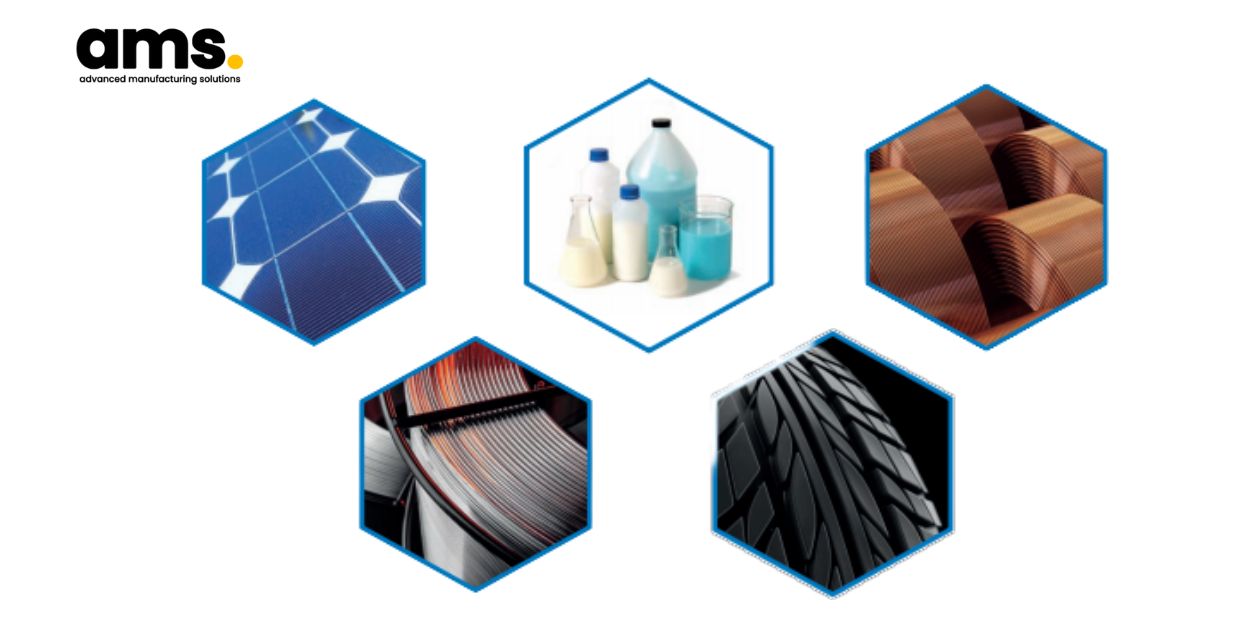
Automotive: Generate strong, durable, high-quality wires for automotive applications, including steel cords, magnet wires, springs, cables, fasteners, bead wires and other components.
-
Construction: Hyperion's carbide nib blanks offer a fantastic combination of durability, versatility, performance and environmental awareness, making them perfect for drawing steel wires more effectively in the construction industry, including wires such as steel bars, construction and pre stressed concrete reinforcement fibers, galvanized and fencing wire, welding wire, and staple wire.
-
Energy & Utilities: Several different types of energy and utility wires are subjected to a lot of wear and tear, making carbide drawing nibs ideal for drawing electrical conductors, including cables and power lines, sawing wire for solar silicon wafers, wind turbines, and other energy technologies.
4. Why Wire Drawing Die Polishing Is Essential
Over time, wire drawing dies lose their original efficiency due to various factors such as:
Die Wear: During the drawing process, continuous contact between the metal wire and the die surface occurs under extremely high pressure. If the die material lacks sufficient hardness, its surface will wear out quickly, lose dimensional accuracy, and result in inconsistent wire sizes or poor surface finish.
Surface Damage: Prolonged exposure to heat and friction causes the die surface to become scratched, pitted, or rough, which directly affects the wire quality and increases the risk of production defects.
Instead of frequently replacing expensive dies, manufacturers often choose a cost-effective approach by extending the lifespan of the existing dies. That's why wire drawing die polishing plays a vital role in restoring precision, improving surface smoothness, and ensuring consistent product quality over time.
>> See more: Applications and Classification of Hyperion Polishing Compounds
5. How to Polish and Restore Wire Drawing Dies
At AMS, we specialize in providing international-standard polishing solutions for wire drawing dies. Our goal is not only to help manufacturers extend die lifespan and maintain product quality, but also to optimize procurement costs by reducing the need for frequent replacements.
The polishing solution we offer is a perfect combination of premium diamond compounds and high-performance lubricants, forming a comprehensive range of industry-leading products including polishing compounds, slurries, and suspensions. These materials are designed to deliver consistent surface finishes, improve dimensional accuracy, and support high-efficiency polishing across a wide range of die materials.
5.1. Diamonds for Compound, Slurry, and Suspension Manufacturing
-
Standard diamond size offerings range from 0.5 to 80 microns (mean size)
-
Available in metal bond, resin bond, polycrystalline, or natural diamond
-
Sold in 50 to 5,000 carat containers
-
Custom particle size distributions are available.
5.2. Diamond Compounds (ready-to-use)
-
Diamond powder and carrier (paste)
-
Heavy, medium, and light diamond concentrations
-
Water, oil, and water/oil (universal) carrier formulations available
-
Sold in syringes or jars
-
Custom formulations available.
5.3. Diamond Slurries and Suspensions (ready-to-use)
-
Diamond powder and carrier (slurry (liquid) or suspension (liquid with stabilizer))
-
Heavy, medium, and light diamond concentrations
-
Sold in bottles or pump/spray bottles
-
Water, oil, and water/oil (universal) formulations available
-
Custom formulations available.
6. Conclusion
Polishing wire drawing dies plays a vital role in helping manufacturers optimize production costs. At AMS, we believe that the die polishing solutions backed by over 70 years of expertise from Hyperion are the ideal choice for every Vietnamese manufacturer aiming to enhance die life and product quality.
With a technically skilled team that deeply understands the wire drawing process, we are ready to provide tailored polishing solutions that meet your specific production needs. Contact us today for expert advice and premium polishing solutions that drive long-term value for your operations.
AMS Company, Ltd.243/9/10D To Hien Thanh, Ward 13, District 10
Hot line: 028.3868 3738/3903 - Fax: 028.3868 3797