
The Role of Encoders in Cement Plants: Applications, Maintenance, and Replacement

Posted by Social AMS on 23rd Dec, 2025
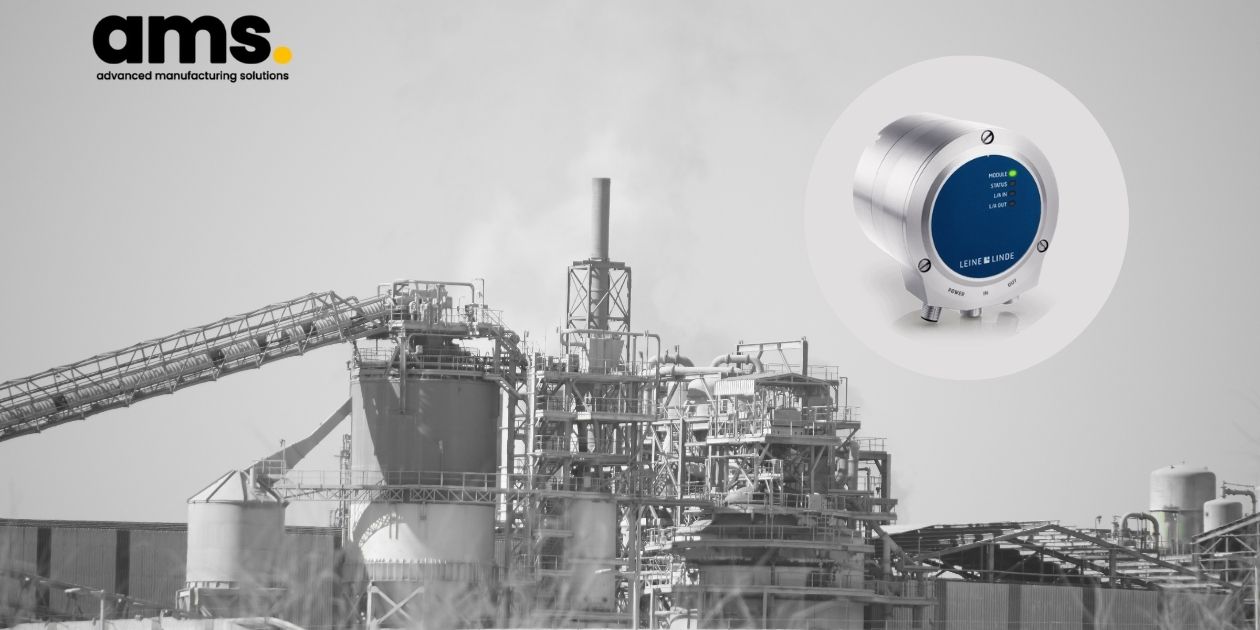
In cement plants, encoders are standard components installed throughout production equipment and process lines. Because cement manufacturing operates in dusty, high-vibration, and harsh environments, encoder failures can directly affect production stability.
In this article, AMS explains the role of encoders in cement plants, their real-world applications, key environmental factors affecting service life, and when encoders should be maintained or replaced. We also introduce several Leine Linde encoder series specifically designed for heavy industries such as cement manufacturing. Explore now.
1. What Is the Role of Encoders in Cement Plants?
According to market reports, the cement industry is expected to show positive growth in 2025, marking a recovery after the challenging period of 2023-2024. During this phase, Vietnam's Ministry of Construction encourages manufacturers to avoid excessive production, balance supply and demand, and actively participate in green value chains from raw material extraction and production to transportation and waste treatment.
In response to this reality, most cement manufacturers are focusing on cost optimization and operational efficiency, rather than capacity expansion. As a precision industrial component supplier, AMS supports cement plants by providing reliable encoders that help ensure stable and continuous operation of production lines.
Encoders are installed in critical cement production equipment such as:
-
Rotary kilns.
-
Grinding mills
-
High-power motors
-
Conveying and drive systems
In these applications, cement plant encoders provide accurate speed and position feedback, enabling stable control of machinery. Due to constant vibration, dust, and extreme operating conditions, encoders used in cement plants must offer high durability, strong resistance to environmental stress, and long service life.
>> See more: Steel Industry Encoders - Optimizing Motion Control in Harsh Environments
2. Three Environmental Factors That Most Affect Encoder Lifespan
In Vietnam, most cement plants purchase encoders primarily for replacement purposes, after existing units fail. Based on AMS's experience supporting heavy industries such as steel, ports, and wind power, we strongly recommend that manufacturers maintain a planned spare parts inventory. This approach helps reduce downtime and ensures fast recovery during unplanned failures.
AMS experts have identified three key environmental factors that most commonly cause encoder damage in cement plants. Understanding these risks is essential for proactive maintenance and replacement planning.
2.1. Impact of Vibration and Mechanical Shock
Cement production equipment operates under constant vibration and mechanical shock. These conditions can introduce electrical noise in encoder signals, often appearing as signal jitter. To cope with this, heavy-duty encoders are designed for increased robustness, sometimes with a trade-off in resolution.
Long-term vibration can also cause:
-
Loose cable connections.
-
Cracked solder joints on PCBs
-
Conductor fatigue and wire damage
-
Uneven bearing loads, leading to premature wear
2.2. Humidity and Contamination
Cement plants generate large amounts of dust and airborne contaminants. If contaminants enter motor seals or encoder bearings, they can degrade lubrication or damage bearing components.
Consequences may include:
-
Severe bearing failure.
-
Particle generation that damages encoder disks
-
Electronic component failure due to moisture and contamination
For this reason, selecting optical encoders with appropriate IP protection ratings is critical for cement plant applications.
2.3. Temperature Effects on Encoder Performance
Sudden temperature changes can cause alignment issues and clearance variations inside encoders. In optical encoders, the air gap between the disk and sensor can be as small as 0.020 inches.
Depending on temperature fluctuations, material thermal expansion coefficients (CTE), and mounting orientation, thermal expansion may cause internal components to contact each other leading to damage or even catastrophic failure.
3. Signs That an Encoder Needs Maintenance or Replacement
Is your cement production line experiencing any of the following issues?
-
Unstable speed readings
-
Intermittent signal loss
-
Drive or inverter feedback alarms
-
Abnormal vibration despite good mechanical condition
If so, AMS recommends inspecting and replacing the encoder promptly to:
-
Stabilize rotational speed
-
Reduce vibration and mechanical wear
-
Minimize unplanned downtime
-
Enable proactive maintenance strategies
4. AMS - Your Encoder Solution Partner for Cement Plants
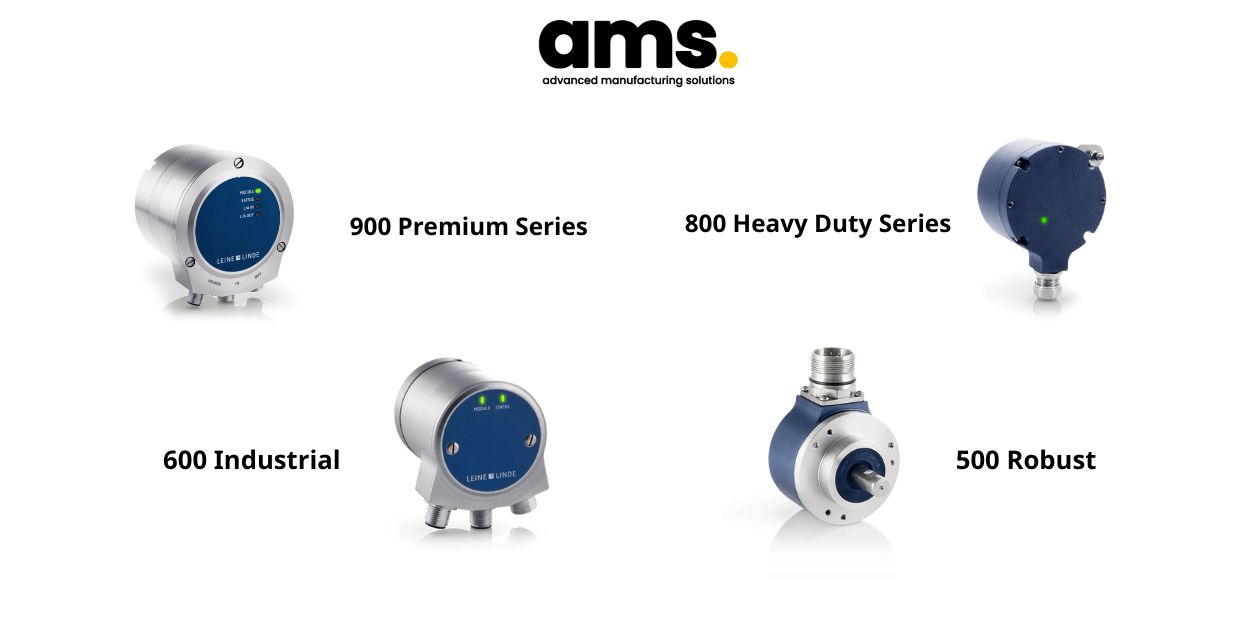
AMS specializes in providing advanced engineering solutions for manufacturers across multiple industries. For the cement industry, we supply Leine Linde encoders, specifically designed for heavy-duty and harsh industrial environments.
If your cement plant requires replacement encoders, you may be looking for models from the following Leine Linde series:
-
900 Premium Series
-
800 Heavy Duty Series
-
600 Industrial Series
-
500 Robust Series
By choosing AMS, you receive more than just genuine Leine Linde encoders. In a market where counterfeit and parallel-import products are often sold at half the price, AMS ensures authentic products with full traceability.
Leine Linde is now part of the Heidenhain Group, and AMS is the exclusive Heidenhain distributor in Vietnam. We offer transparent purchasing policies, fast processing, and flexible after-sales support.
AMS is always ready to advise and support your cement plant with encoder maintenance and replacement solutions.
5. Conclusion
Identifying early signs of encoder failure and planning timely maintenance or replacement is essential for cement plant operations. AMS aims to act as a reliable bridge, helping cement manufacturers quickly access genuine, high-quality Leine Linde encoders in Vietnam.
We look forward to partnering with manufacturers to support stable operations and sustainable growth in the cement industry.
AMS Company, Ltd.243/9/10D To Hien Thanh str, Hoa Hung Ward, HCMC, Vietnam
Hot line: 028.3868 3738/3903 - Fax: 028.3868 3797